Explore Clinical Research Studies as an Option for Me or Someone I Care About

image

Deciding to participate in a clinical research study is a decision that takes careful thought and consideration. Your healthcare provider (HCP) can be an important partner as you ask questions, explore your options, and decide whether a clinical research study may be right for you.

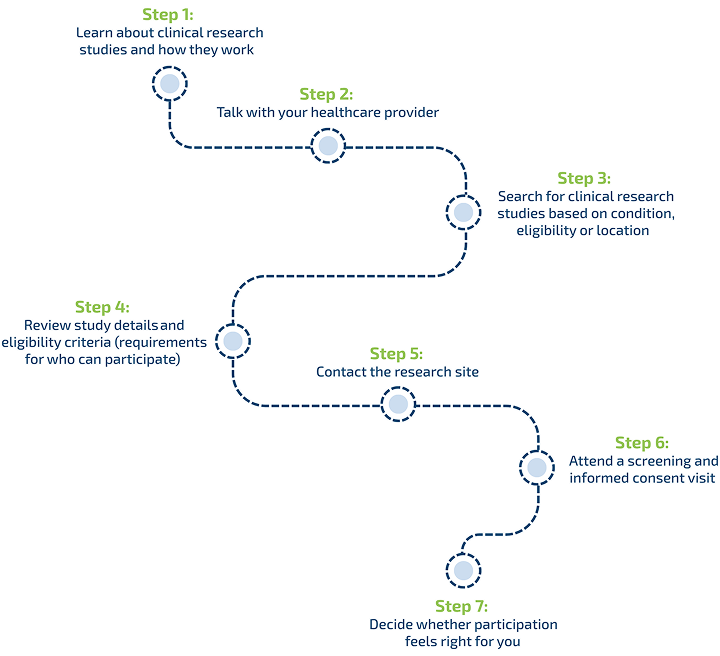
Considering Clinical Research: Steps to Getting Started

steps
Step 1: Learn about clinical research studies and how they work
Step 2: Talk with your healthcare provider
Step 3: Search for clinical research studies based on condition, eligibility or location
Step 4: Review study details and eligibility criteria (requirements for who can participate)
Step 5: Contact the research site
Step 6: Attend a screening and informed consent visit
Step 7: Decide whether participation feels right for you
 

How Your Healthcare Provider Can Help

If you are considering a clinical research study, your healthcare provider can help you understand how a clinical research study may fit into your overall care plan and personal health goals.

  • Your healthcare provider can help determine if a clinical research study is a good fit for you. They may be able to help you find a clinical research study based on your diagnosis.
  • They can explain the benefits and risks of participation, based on your own personal health needs.
  • They can help you understand clinical research study eligibility criteria.
  • They can offer advice about good questions to ask the clinical research study team.
  • Your healthcare provider also reviews your medical history and eligibility for a particular research study and may refer you to clinical research sites or specialists.
  • Your healthcare provider can also work alongside the clinical research study team to help support your ongoing care throughout the study.

Preparing to Speak with Your Healthcare Provider

It’s okay to bring questions, concerns, or even uncertainty into the conversation. When preparing to speak with your healthcare provider about participating in a clinical research study, it’s important that you feel informed, supported, and comfortable asking questions.

Clinical research studies can bring questions and uncertainty. Having an honest conversation with your healthcare team can help you better understand your options, what participation may involve, and whether a clinical research study may be right for your individual situation.

Before your appointment, consider writing down questions about the purpose of the clinical research study, possible benefits and risks, time commitments, eligibility requirements, and how participation may affect daily life or current treatment plans.

You and your caregiver should feel comfortable asking for information in simple, easy-to-understand language. Don’t hesitate to ask your healthcare provider to explain unfamiliar terms or provide additional educational resources.

Caregivers can play an important role by attending appointments, taking notes, helping ask questions, and providing emotional and practical support as decisions are made.

Understanding what participation involves— what to expect, timelines, what will be asked of you, and the  possible outcomes associated with a clinical research study can help both patients and caregivers make informed decisions together.

Participation in a clinical research study is a personal choice and is always your decision. Your healthcare team can help determine whether studying is the right fit for your individual needs, goals, and treatment journey.

Questions to Ask Your Healthcare Provider

If you’re looking for guidance on the clinical research study process, your healthcare provider is a great place to start. They can help you understand your options, find clinical research studies that match your condition, and walk you through the process.

Below are some questions to start the conversation with your healthcare provider.

1. How do I find out if I qualify to join a clinical  research study?  
2. Who makes sure a clinical research study is safe?
3. Are there any possible problems, risks, or side effects from being in a clinical research study, and how will the clinical research study team help me deal with them? 
4. How long does a regular clinical research study take, and how many times will I have to go to the clinic or research place?
image
image
5. Can I bring someone with me to do clinical  research study visits?
6. Can I still get care from my regular healthcare provider while I’m in clinical  research study?
7. Who else will know I am in a clinical research study?
8. What if I don’t like being in a clinical research study after I start?
5. Can I bring someone with me to do clinical  research study visits?
6. Can I still get care from my regular healthcare provider while I’m in clinical  research study?
7. Who else will know I am in a clinical research study?
8. What if I don’t like being in a clinical research study after I start?
image

Are You Supporting a Loved One? Here's How You Can Help

Caregivers and loved ones can play an important role in helping someone explore and navigate clinical research study options. Often, the support of a caregiver is what can make participation possible. If you are a caregiver, here are some ways you can be actively involved:

1. Observe and keep track

Track symptoms such as mood, sleep, and side effects regularly. Your notes are valuable data.

2. Stay on top of the schedule

Help manage medications, appointments, and study requirements to stay organized.

3. Don't be afraid to speak up

Share your observations with the research team. Your perspective offers insights lab results can't capture.

4. Coordinate travel arrangements

Plan transportation and appointments in advance to reduce stress on clinical research study days.

5. Stay connected to the care team

Keep other providers informed so everyone has the latest updates.

It is natural to have lots of questions when you or a loved one are considering a clinical research study. Taking time to learn about clinical research studies and speak openly with your healthcare provider can help you feel more informed and supported as you explore your options.

Those who do choose to participate become part of something larger than any single study: a collective effort to better understand diseases and open up new possibilities for treating them.


Explore Current argenx Clinical Trials

argenx sponsors clinical trials researching investigational therapies for people living with severe autoimmune diseases. Explore currently recruiting studies and  learn more about clinical trial participation, eligibility requirements, and study locations.