IIP Accelerates Immunology Innovation

At argenx, innovation starts with a question and advances through collaboration. Our Immunology Innovation Program (IIP) is a co-creation engine designed to translate breakthrough immunology insights into differentiated antibody-based medicines.

Through the IIP, we partner closely with leading academic and clinical researchers, combining their deep disease and target biology expertise with our world-class antibody engineering and development capabilities. Together, we work across discovery, de-risking, and development to move promising ideas efficiently toward clinical proof of concept.

Built on transparency, long-term commitment, and shared success, the IIP reflects how argenx works best – side-by-side with collaborators, advancing science that has the potential to define what’s possible for patients.


IIP Accelerates Immunology Innovation

At argenx, innovation starts with a question and advances through collaboration. Our Immunology Innovation Program (IIP) is a co-creation engine designed to translate breakthrough immunology insights into differentiated antibody-based medicines.

Through the IIP, we partner closely with leading academic and clinical researchers, combining their deep disease and target biology expertise with our world-class antibody engineering and development capabilities. Together, we work across discovery, de-risking, and development to move promising ideas efficiently toward clinical proof of concept.

Built on transparency, long-term commitment, and shared success, the IIP reflects how argenx works best – side-by-side with collaborators, advancing science that has the potential to define what’s possible for patients.

Inside argenx Antibody Engineering

Using our proprietary SIMPLE Antibody™ and Fc engineering platforms, argenx scientists design and optimize antibodies that engage and modulate the immune system, unlocking new therapeutic pathways in autoimmune and rare diseases.

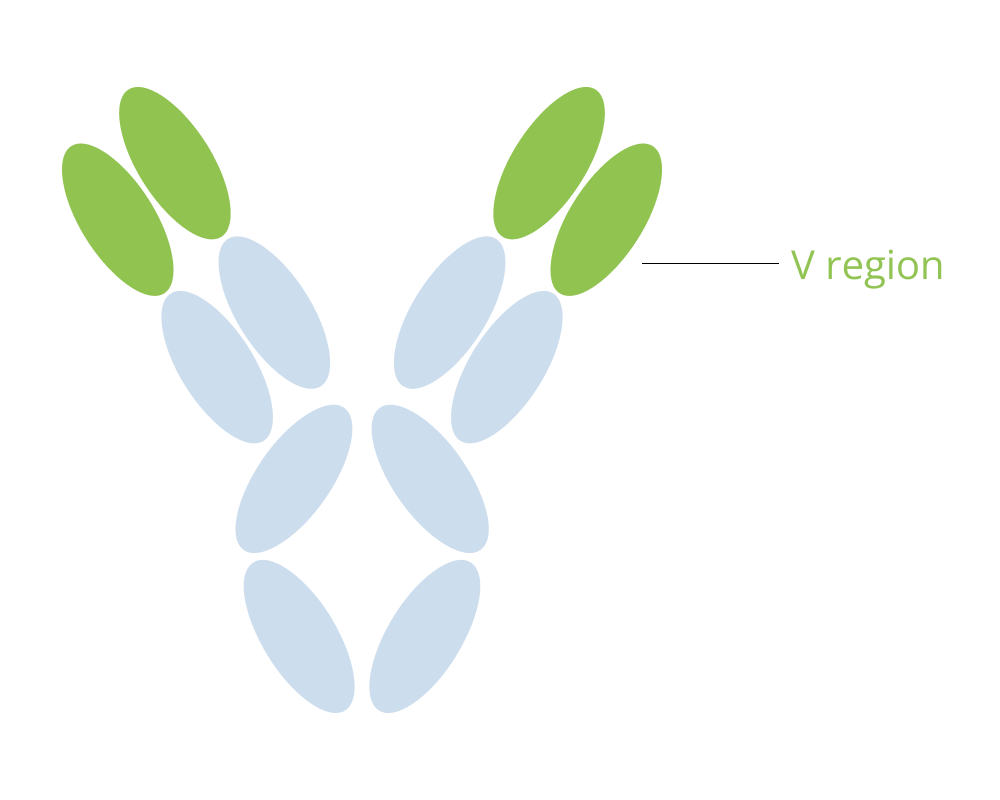
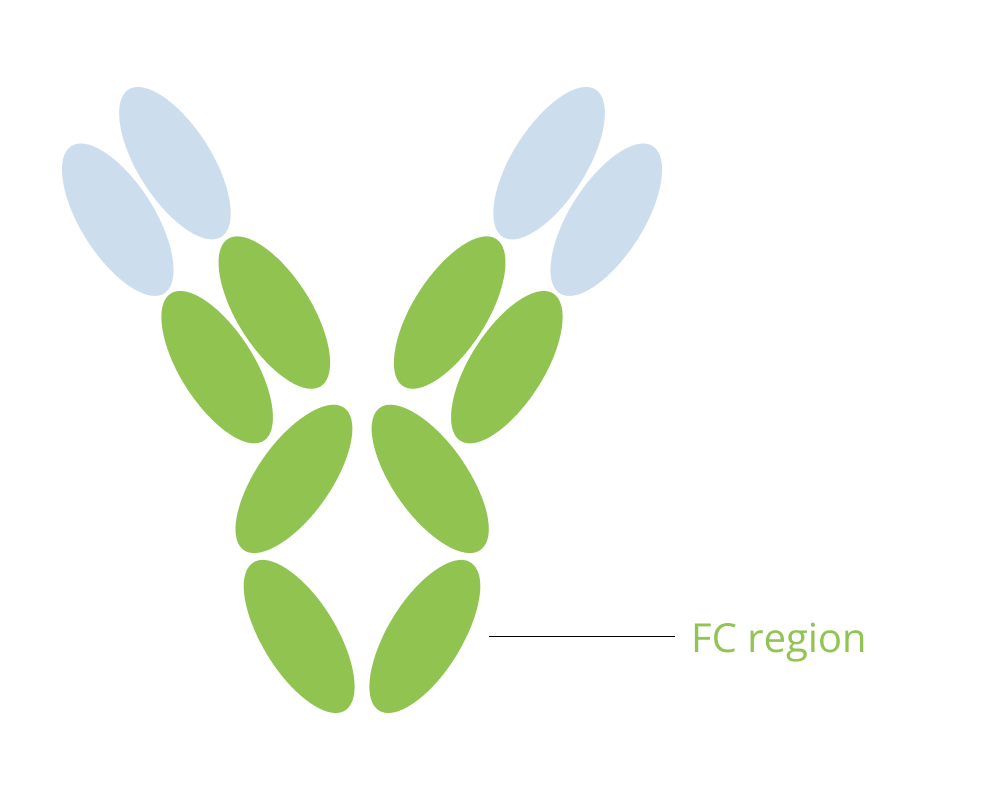
We innovate at both the variable region or V region (where antigens and foreign proteins are recognized) and the constant region or Fc region (where antibodies modulate other cells in the immune system):

Unlock Novel and Complex Targets


Our proprietary SIMPLE AntibodyTM platform sources V regions from the immune systems of outbred llamas, which naturally produce highly diverse antibodies with strong similarity to human antibodies. This diversity allows argenx scientists to identify antibody candidates that recognize novel and complex disease targets often missed by traditional discovery methods.

By combining llama-derived V regions with fully human Fc regions, argenx creates a library of human-like antibodies that can be tested across multiple epitopes to find the right balance of potency, safety, and species cross-reactivity. This enables a more efficient discovery process and accelerates early-stage development.

placeholder

Modulate Immune Response for Therapeutic Precision


argenx enhances antibody performance through proprietary Fc engineering technologies, including NHANCE®, ABDEGTM, and POTELLIGENT®. These tools allow precise control over how antibodies interact with the immune system, improving half-life, effector function, and tissue targeting.

By adjusting the Fc region, argenx can tailor an antibody’s immune activity to match the specific needs of each therapeutic program. This precision engineering supports safer, more effective treatments across a wide range of autoimmune and rare diseases.

placeholder

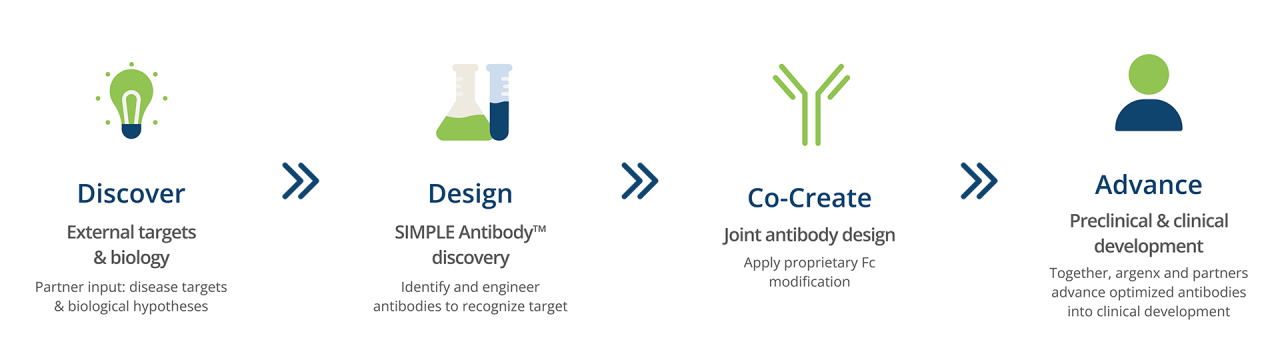
argenx integrates its SIMPLE AntibodyTM and Fc engineering platforms across the full development process, working closely with partners to accelerate innovation. External scientists and organizations contribute novel disease targets or biological insights, while argenx applies its discovery and engineering expertise to design optimized antibody candidates.

Together, these collaborations move antibody concepts from early discovery to preclinical and clinical development, translating groundbreaking science into potential new therapies for patients.

placeholder

Unlock Novel and Complex Targets


Our proprietary SIMPLE Antibody™ platform sources V regions from the immune systems of outbred llamas, which naturally produce highly diverse antibodies with strong similarity to human antibodies. This diversity allows argenx scientists to identify antibody candidates that recognize novel and complex disease targets often missed by traditional discovery methods.

By combining llama-derived V regions with fully human Fc regions, argenx creates a library of human-like antibodies that can be tested across multiple epitopes to find the right balance of potency, safety, and species cross-reactivity. This enables a more efficient discovery process and accelerates early-stage development.

V-Region

Modulate Immune Response for Therapeutic Precision


argenx enhances antibody performance through proprietary Fc engineering technologies, including NHANCE®, ABDEG™, and POTELLIGENT®. These tools allow precise control over how antibodies interact with the immune system, improving half-life, effector function, and tissue targeting.

By adjusting the Fc region, argenx can tailor an antibody’s immune activity to match the specific needs of each therapeutic program. This precision engineering supports safer, more effective treatments across a wide range of autoimmune and rare diseases.

FC Region
Antibody Engineering - From Discovery to Development process diagram
Antibody Engineering - From Discovery to Development process diagram Mob


argenx integrates its SIMPLE Antibody™ and Fc engineering platforms across the full development process, working closely with partners to accelerate innovation. External scientists and organizations contribute novel disease targets or biological insights, while argenx applies its discovery and engineering expertise to design optimized antibody candidates.

Together, these collaborations move antibody concepts from early discovery to preclinical and clinical development, translating groundbreaking science into potential new therapies for patients.

Co-creation in Action

Every breakthrough in the IIP begins with a question. Together with our collaborators, we have built a portfolio of programs that showcase how our partnerships with researchers accelerate antibody discovery, research, and development into potential new treatments for autoimmune diseases.

Efgartigimod

Efgartigimod (ARGX-113) was designed as a human IgG1 antibody Fc-fragment, a natural ligand of the neonatal Fc receptor (FcRn). FcRn is known to extend half-life and availability of pathogenic IgG antibodies.

Efgartigimod has been engineered for increased affinity to FcRn and was built in collaboration with Prof. E. Sally Ward, Ph.D. who is a pioneer of FcRn biology.


Read more
Case Study Icons: Efgartigimod

TARGET: FcRn

Collaboration: The Power of Partnership

Discover how our collaborative model transforms ideas into impact through scientific partnerships.


Read more
Case Study Icons: IIP Collaboration

ARGX-119: The Collaborative Tale of an Agonist Antibody

Learn how ARGX-119, a first-in-class humanized monoclonal antibody (mAb) specifically designed to activate muscle-specific kinase (MuSK), emerged from our Immunology Innovation Program to redefine what’s possible in antibody-based therapies.

Developed in collaboration with Jan Verschuuren, M.D., Neurologist, and Maartje Huijbers, Ph.D., Associate Professor and Research Group Leader at Leiden University Medical Center, as well as Steve Burden, Ph.D., during his tenure at NYU.


Read more
Case Study Icons: Argx-119

TARGET: MuSK

ARGX-118

ARGX-118 was designed as a highly differentiated antibody against Galectin-10, the protein of Charcot-Leyden crystals, which are implicated as a major contributor to severe asthma and to the persistence of mucus plugs.

ARGX-118 was built in collaboration with Prof. Bart Lambrecht, M.D., Ph.D. who identified the first novel airway inflammation target in decades.


Read more
Case Study Icons: Argx-118

TARGET: Galectin-10

ARGX-115

ARGX-115 (now ABBV-151) was designed as a humanized monoclonal antibody inhibitor of GARP- TGF-β1 and is in development by AbbVie for the treatment of cancer.

ARGX-115 was built in collaboration with Prof. Sophie Lucas, M.D., Ph.D. who has been a leader in checkpoint biology research since 1985.


Read more
Case Study Icons: Argx-115

TARGET: GARP

Collaboration: The Power of Partnership


Discover how our collaborative model transforms ideas into impact through scientific partnerships.


Read more
placeholder

ARGX-119: The Collaborative Tale of an Agonist Antibody


Learn how ARGX-119, a first-in-class humanized monoclonal antibody (mAb) specifically designed to activate muscle-specific kinase (MuSK), emerged from our Immunology Innovation Program to redefine what’s possible in antibody-based therapies. Developed in collaboration with Jan Verschuuren, MD, Neurologist, and Maartje Huijbers, PhD, Associate Professor and Research Group Leader at Leiden University Medical Center, as well as Steve Burden, PhD, during his tenure at NYU.


Read more
placeholder

Efgartigimod


Efgartigimod (ARGX-113) was designed as a human IgG1 antibody Fc-fragment, a natural ligand of the neonatal Fc receptor (FcRn). FcRn is known to extend half-life and availability of pathogenic IgG antibodies.

Efgartigimod has been engineered for increased affinity to FcRn and was built in collaboration with Prof. E. Sally Ward, Ph.D. who is a pioneer of FcRn biology.


Read more
Efgartigimod background

Target:
FcRn

ARGX-118


ARGX-118 was designed as a highly differentiated antibody against Galectin-10, the protein of Charcot-Leyden crystals, which are implicated as a major contributor to severe asthma and to the persistence of mucus plugs.

ARGX-118 was built in collaboration with Prof. Bart Lambrecht, M.D., Ph.D. who identified the first novel airway inflammation target in decades.


Read more
case studies argx-118 background

Target:
Galectin-10

ARGX-115


ARGX-115 (now ABBV-151) was designed as a humanized monoclonal antibody inhibitor of GARP- TGF-β1 and is in development by AbbVie for the treatment of cancer.

ARGX-115 was built in collaboration with Prof. Sophie Lucas, M.D., Ph.D. who has been a leader in checkpoint biology research since 1985.


Read more
case studies argx-115 background

Target:
GARP

Collaboration: The Power of Partnership


Case Study Icons: IIP Collaboration


Discover how our collaborative model transforms ideas into impact through scientific partnerships.


Read more

ARGX-119: The Collaborative Tale of an Agonist Antibody


Case Study Icons: Argx-119

TARGET: MuSK


Learn how ARGX-119, a first-in-class humanized monoclonal antibody (mAb) specifically designed to activate muscle-specific kinase (MuSK), emerged from our Immunology Innovation Program to redefine what’s possible in antibody-based therapies.

Developed in collaboration with Jan Verschuuren, MD, Neurologist, and Maartje Huijbers, PhD, Associate Professor and Research Group Leader at Leiden University Medical Center, as well as Steve Burden, PhD, during his tenure at NYU.


Read more

Efgartigimod


Case Study Icons: Efgartigimod

TARGET: FcRn


Efgartigimod (ARGX-113) was designed as a human IgG1 antibody Fc-fragment, a natural ligand of the neonatal Fc receptor (FcRn). FcRn is known to extend half-life and availability of pathogenic IgG antibodies.

Efgartigimod has been engineered for increased affinity to FcRn and was built in collaboration with Prof. E. Sally Ward, Ph.D. who is a pioneer of FcRn biology.


Read more

ARGX-118


Case Study Icons: Argx-118

TARGET: Galectin-10


ARGX-118 was designed as a highly differentiated antibody against Galectin-10, the protein of Charcot-Leyden crystals, which are implicated as a major contributor to severe asthma and to the persistence of mucus plugs.

ARGX-118 was built in collaboration with Prof. Bart Lambrecht, M.D., Ph.D. who identified the first novel airway inflammation target in decades.


Read more

ARGX-115


Case Study Icons: Argx-115

TARGET: GARP


ARGX-115 (now ABBV-151) was designed as a humanized monoclonal antibody inhibitor of GARP- TGF-β1 and is in development by AbbVie for the treatment of cancer.

ARGX-115 was built in collaboration with Prof. Sophie Lucas, M.D., Ph.D. who has been a leader in checkpoint biology research since 1985.


Read more

An Innovation Ecosystem

Explore our innovation ecosystem through a series of stories that bring the IIP to life from discovery to collaboration to pioneering science shaping future therapeutics.

Partner with Us

Together We Discover

The Immunology Innovation Program is based on mutual respect for the expertise that each partner brings. Our research collaborators bring unique knowledge of disease biology or disease pathways, along with the spirit of scientific entrepreneurship. argenx can offer antibody engineering capabilities and a path to turn an immunology breakthrough into a clinical development candidate.

Together, with our partners, we have the potential to create differentiated medicines for patients.

Share your information to partner with us

argenx respects your privacy. Personal information is never kept longer than necessary. Personal data is not provided to third parties without permission or used for marketing purposes.

Academic Collaborators

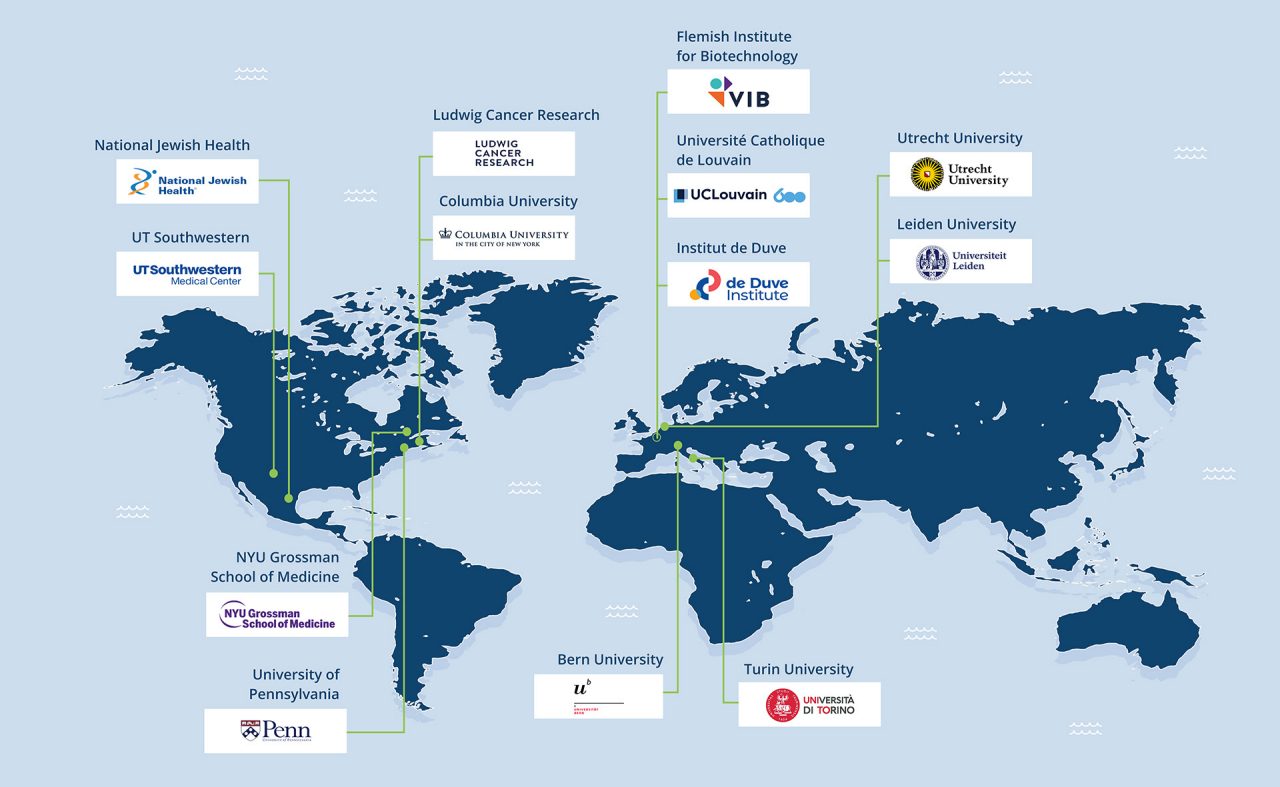
Partnering with leading academic and scientific institutions across Europe and North America, argenx drives global innovation in immunology and antibody discovery.

Academic Collaborators Map